3.15 drivetrain
Rear Derailleur Setup (Mechanical)
Rear Derailleur Setup (Mechanical). Step-by-step procedure for bike maintenance — tools, time, and what to watch out for.
Tools
- 2.5–4mm hex (cable bolt and limits)
- Phillips or hex for limit screws and B-tension
- cable cutter
Procedure
-
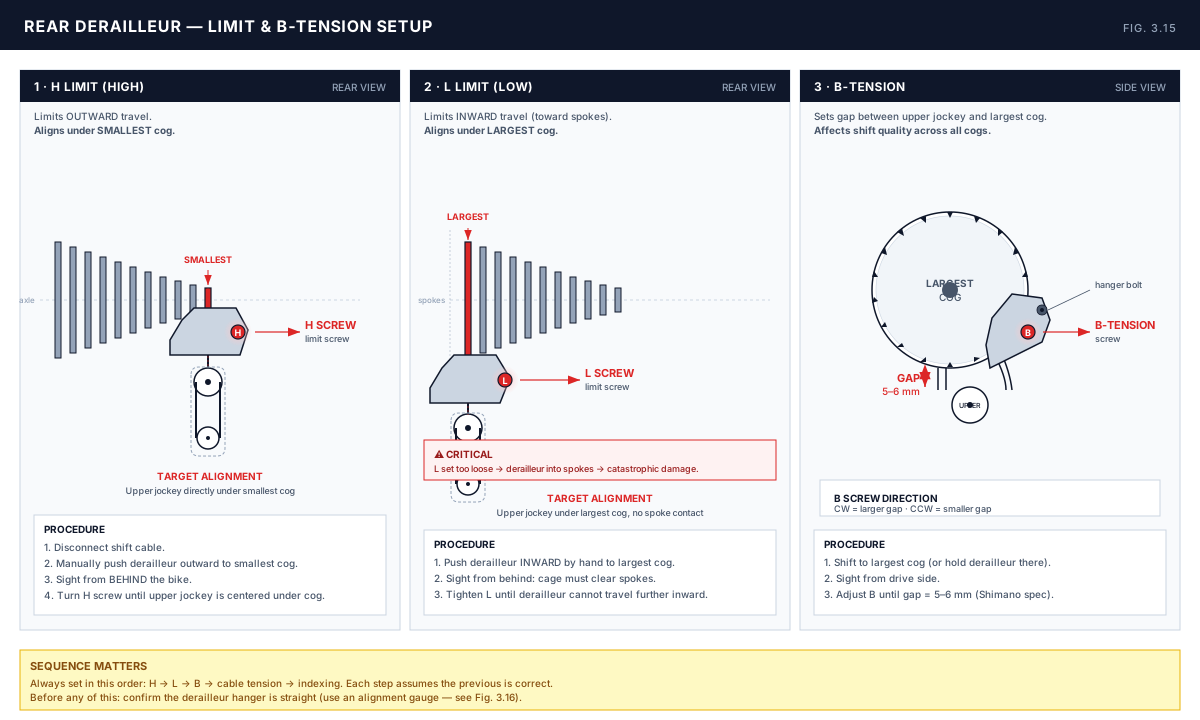
Verify hanger is straight first
(3.16). All other steps are wasted if it's bent.
-
Disconnect the shift cable
at the pinch bolt.
-
Set the high limit (H screw)
- Manually move the derailleur so the upper jockey wheel sits directly under the smallest cog when viewed from behind.
- Adjust the H screw until this alignment is correct. Look down the chain line — upper pulley should be in plane with the smallest cog.
-
Set the low limit (L screw)
- Push the derailleur inward (toward the spokes) by hand or pull the cable.
- Adjust the L screw so the upper jockey wheel sits directly under the largest cog, but the derailleur cage cannot move further inward and contact the spokes.
-
Set the B-tension screw
- Shift the chain to the largest cog (or hold the derailleur there manually).
- Set the gap between the upper jockey wheel and the largest cog to the derailleur manufacturer's specification. Some Shimano road/older MTB setups are commonly around 5–6 mm, while many modern wide-range derailleurs require a setup gauge or a larger specified gap.
- Turn the B-screw clockwise to increase the gap, counter-clockwise to decrease.
-
Reconnect the cable
- Ensure the shifter is in its highest position (smallest cog).
- Turn the barrel adjuster on the derailleur (or shifter) all the way in, then back out 1 turn — this gives you adjustment range in both directions.
- Pull the cable taut through the pinch bolt; tighten to spec (4–5 Nm).
-
Index the gears
- Shift the lever one click toward a larger cog.
- The chain should hop cleanly to the next cog.
- If it hesitates or fails to shift up: add tension (turn barrel adjuster counter-clockwise, 1/4 turn at a time).
- If it overshoots or skips two cogs: reduce tension (turn barrel adjuster clockwise).
- Work through every cog in both directions, fine-tuning until shifts are crisp throughout.