8.1 suspension

Setting Sag (Air Fork)

Sag = how much the suspension compresses under static rider weight, expressed as a percentage of total travel.
Difficulty ☆☆ easy
Time ~10 min (in full kit)
Applies to Bikes with suspension fork (MTB, suspension Gravel, some E-bike)
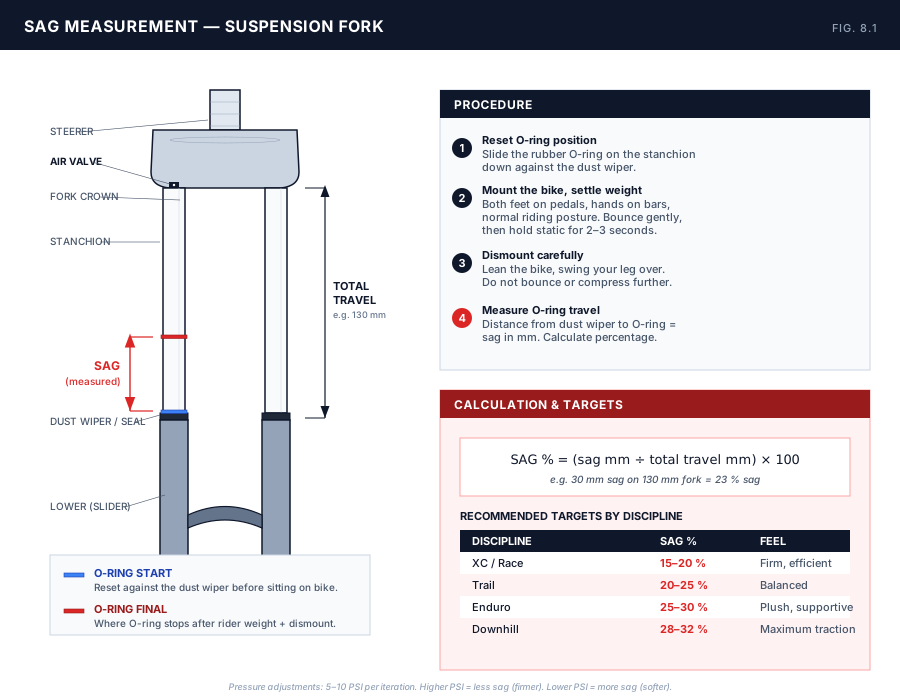
Suspension fork sag measurement procedure with O-ring positions and target table

Tools

  • Shock pump

Procedure

  1. Locate the air valve

    on top of one fork leg (usually under a small cap on the left leg).
  2. Remove the cap

    and thread the shock pump onto the valve. The pump's gauge will show current pressure — ignore initially.
  3. Note current pressure

    as a starting reference.
  4. Push the rubber sag indicator O-ring

    (on the fork stanchion) all the way down against the seal.
  5. Get on the bike in normal riding gear and posture

    — both feet on pedals, hands on bars, weight evenly distributed. Bounce gently to settle the suspension, then hold a static position for a moment.
  6. Carefully dismount

    without compressing the fork further (lean the bike, swing a leg over without bouncing).
  7. Measure the position of the O-ring

    on the stanchion. The distance from the fork seal to the O-ring = sag in mm.
  8. Calculate sag percentage:

    (sag mm) / (total travel mm) × 100.
  9. If sag is too high (too soft):

    add 5–10 PSI, repeat from step 4.
  10. If sag is too low (too firm):

    release 5–10 PSI (a quick press of the shock pump's release valve), repeat.
  11. Set rebound and compression:

    - **Rebound:** the red knob (usually at the bottom of the right fork leg). Start at the manufacturer's recommended setting (often a count of clicks from full-fast). Faster rebound = more lively but potentially bouncy; slower = more controlled but can pack down in fast hits. - **Compression:** if your fork has it (high-speed and low-speed adjusters), start at recommended open settings and adjust as you ride. ---

Sag = how much the suspension compresses under static rider weight, expressed as a percentage of total travel.

Typical targets:

  • XC fork: 15–20% sag
  • Trail fork: 20–25% sag
  • Enduro/DH: 25–30% sag

Procedure #

  1. Locate the air valve on top of one fork leg (usually under a small cap on the left leg).
  2. Remove the cap and thread the shock pump onto the valve. The pump’s gauge will show current pressure — ignore initially.
  3. Note current pressure as a starting reference.
  4. Push the rubber sag indicator O-ring (on the fork stanchion) all the way down against the seal.
  5. Get on the bike in normal riding gear and posture — both feet on pedals, hands on bars, weight evenly distributed. Bounce gently to settle the suspension, then hold a static position for a moment.
  6. Carefully dismount without compressing the fork further (lean the bike, swing a leg over without bouncing).
  7. Measure the position of the O-ring on the stanchion. The distance from the fork seal to the O-ring = sag in mm.
  8. Calculate sag percentage: (sag mm) / (total travel mm) × 100.
  9. If sag is too high (too soft): add 5–10 PSI, repeat from step 4.
  10. If sag is too low (too firm): release 5–10 PSI (a quick press of the shock pump’s release valve), repeat.
  11. Set rebound and compression:
    • Rebound: the red knob (usually at the bottom of the right fork leg). Start at the manufacturer’s recommended setting (often a count of clicks from full-fast). Faster rebound = more lively but potentially bouncy; slower = more controlled but can pack down in fast hits.
    • Compression: if your fork has it (high-speed and low-speed adjusters), start at recommended open settings and adjust as you ride.